Blog
Content Gap Analysis: How to Evaluate and Improve Your Strategy
how you can use content gap analysis to evaluate and improve your website's content.
Unlock SEO power with a definitive guide on topic clusters and pillar pages.
You want to have sushi for lunch. You don't know any restaurants nearby. What do you do?
You probably open up Google to search for the nearest place.
What do you type in the search bar? "Sushi Restaurants" is way too vague and broad. So, you probably type something more specific such as "Sushi Restaurants near me" or "Where can I have sushi?"
What's incredible is that Google understands what you want. It shows you the nearest sushi restaurants to your location!
How does this even happen? And what does this have to do with digital marketing? What are Topic Clusters? And what about Pillar Pages? How do they connect to all of this?
In the last few years, search queries have become longer and more specific. Users assume that Google is smart enough to understand conversational search queries.
To adapt, search engine algorithms had to be optimized to understand the user search intent better. Now, the topic cluster approach is taking over the world of digital marketing. You no longer think of your content in terms of keywords, but a bunch of semantically related topics instead.
This way, the search engine can understand what topics your website is aiming for. It puts you in the higher ranks for those topics. You also end up with much more organized content on your website.
With the way search engine algorithms are rapidly changing, you can say goodbye to the age of keyword stuffing in an attempt to rank higher on search engine results pages (SERPs).
A pillar page is a detailed guide that covers a broad topic and serves as a reliable source of information. It offers a comprehensive overview while also leaving room for further exploration and addressing unanswered questions.
You can think of a pillar page as the core topic from which multiple subtopics branch out. For example, (SEO) can be your core topic, for which you will create a pillar page. The topic is broad enough to birth multiple subtopics, such as local SEO, on-page SEO, off-page SEO, technical SEO, and more!
A pillar page can be a blog post or an article, representing a comprehensive overview of your topic with high-level descriptions. The topic of a pillar page must be broad enough to cover numerous subtopics.
Your pillar page must abide by search engine optimization (SEO) rules.
Topic clusters are the framework to which a pillar page belongs. Their main idea is to divide your content strategy into core topics such as SEO, digital marketing, content marketing... etc.
Each of the previous core topics can be considered the pillar or the center of a topic cluster, meaning you can create a pillar page for that core topic.
After that, you start branching subtopics out of this core topic. Each subtopic can be turned into a piece of content on its own. For example, you can create a blog post for each subtopic of the digital marketing core topic, such as email marketing and social media marketing.
As we learned before, a pillar page represents a broad core topic. It sits right at the center of a cluster topic. It's best that it includes images, videos, and infographics in addition to answering all the questions that might occur to the reader. It often includes a section for frequently asked questions (FAQ) at the end.
These are the branches of your pillar page. They are chosen based on popularity and importance. If you choose SEO as your core topic, you will have various subtopics, such as local SEO, on-page SEO, off-page SEO, and technical SEO.
Your subtopics are the base of the cluster content. The cluster content includes all sorts of content you can craft to explore your subtopics further. This content could be articles, blog posts, podcasts, infographics, videos, and more.
This is how we connect all of our topic cluster components! It is crucial to establish internal linking between each piece of cluster content and the pillar page. This way, the search engine crawlers understand the theme you are going for and help you increase your visibility on SERPs.
Having an ecosystem of related topics creates a theme for your content. This helps search engine crawlers recognize your website as a credible source of information for your niche. This way, you have a higher chance of ranking on SERPs.
Exploring one core topic in a variety of cluster content gives you a chance to attract more original traffic. This is because you answer long-tail questions that people are searching for within your topic cluster. There's no doubt how critical organic traffic is for conversions and sales. People who specifically search for the products and services you are offering are more likely to convert upon seeing your content.
Topic clusters make life much easier for content writers. There's no need to rack your brain, trying to come up with new content ideas anymore. By following the topic cluster framework, you guarantee coming up with at least ten subtopics for each cornerstone page. All you have to do after that is start creating informative and valuable content!
Your users' interest is the most valuable coin to earn. Having a website with closely connected topics that are easy to navigate means capturing customers' attention and increasing their time on your website. This leads to a higher chance of conversion.
Now that you understand the importance of using the topic clusters framework, we will walk you through the steps of creating a topic cluster.
You need to invest some time exploring the ideas your competitors write about. The goal of topic discovery is to identify new content ideas that will resonate with your target audience and help you to establish your expertise and authority within your niche.
You also need to understand the customer journey, and what stage they are at. This will determine the content angle you will choose to write from. Writing for a customer in the awareness stage is totally different from writing for one in the decision stage.
Many tools can help you perform topic discovery, such as WriterZen's Topic discovery will give you an idea about your content pillars which are your themes or core topics.
Now that you have a good grasp of what your main pillars could be, you need to perform some brainstorming. Pick one pillar topic, and consider all subtopics related to this specific topic.
Returning to our examples, if you pick SEO as the cornerstone page, you will have many sub-topics, such as local SEO, on-page SEO, off-page SEO, and technical SEO. While picking a subject like digital marketing gives you sub-topics such as email marketing and social media marketing... etc.
Brainstorming isn't the only way to go around this. You want to make the best out of keyword research at this stage using different keyword research tools. Creating a list of target keywords gives you many ideas about what to write about.
Remember, our approach in the topic cluster frame is different. We are not aiming to stuff our page with the largest list of keywords out there! We are treating our content in terms of core topics.
Yet using relevant keywords in your chosen topics is still crucial to creating SEO-optimized content! You still want to aim for words with a high search volume. That's what the users are curious about, after all. Aim for one primary keyword per subtopic.
Besides, target keywords will give you a great idea about all the possible subtopics of a particular pillar topic.
Take advantage of the keyword clustering concept. This means grouping keywords with similar search results together. This is simply because they have the same user search intent, so they belong to the same topic.
If you have an established website, chances are, you already have many pieces of content published. You are not just starting to search for new ideas from scratch. Hence, a very crucial step is conducting a content gap analysis.
What this means, in simple words, is looking at your existing content and comparing it with competitors. This process often leads to finding different topics that your competitors tackled while you completely missed.
Congratulations! You have identified the gaps in your content. All you need next is to try to fill them.
Now that you know where the gaps lie in your content, you can perform a content audit to ensure all the gaps are filled, and your content is up-to-date. Not only do you discover new ideas to cover, but you should also find new ways to cover your existing content attractively for the target audience.
Here, you want to think about your content angle, titles, the users' search intent, the readability of your articles, and whether your published pieces are up-to-date.
After creating a model for your topic cluster, you have a good idea of what content you need to create. It's time to start organizing this in a neat timeline. Start by estimating how much it takes your team to finish a piece of content. Then, you can go on and create a list of the required content along with the responsible team members and the approximate deadline.
Now that we have prepared our calendar, we are ready to create the cluster content. Remember the subtopics we identified using brainstorming and keyword research? Well, time to finally use those.
You should have a clear idea about the subtopics of your pillar page by now. All that is left is creating the content. This content can take many forms, such as blog posts, articles, videos, or podcasts. There are no restrictions.
Just make sure that your content tackles your subtopics in depth. For example, if you are writing for an SEO pillar page, aim to cover at least ten relevant topics in your content cluster.
Don't forget to write for your reader first, then for Google. You can start by picking one of your subtopics, preparing a content brief for this topic, and start creating! Use content curation to get a good grasp of your topic.
Remember to make the content fun, interactive, and easy to navigate. Add a table of content, images, videos, infographics, and a FAQ section to have a nicely polished piece of content.
Your cluster content must also abide by SEO rules. The cluster content tends to focus more on long-tail keywords.
The time has finally come to create our pillar page! How can you use all the research outcomes that you have gathered so far? Glad you asked. By now, you should picture your pillar page as the core topic in the center of a bunch of related topics. A pillar page has many features, such as:
SEO-optimized: It should target high-volume keywords and act as the rope tying all your cluster content together. So, every topic in your cluster must be mentioned on the pillar page. And of course, it should follow SEO rules.
Comprehensive: Your page acts as a comprehensive overview or a content hub for a core topic. Returning to our example, our pillar page will be about SEO in general, yet we must mention all subtopics we plan on creating content for, such as local SEO, technical SEO... etc.
Long and detailed: The length of your pillar content depends on the topic, yet the page should be detailed and in-depth. You want to aim for at least 2000 words. The pillar content should be high-quality and valuable for your readers.
Easy to navigate: Don't forget to add a table of contents to your page to make navigation easier for your readers. Adding a section for frequently asked questions (FAQs) also makes a difference. This way, you can rest assured that you answered all questions in your reader's mind. Add a call to action (CTA) if you need to!
Visually appealing: You want to create an interactive pillar post. This means using images, videos, and infographics.
Use your imagination. The sky is the limit.
Now that you have created your pillar page and cluster content, there's only one last step. Go back to your pillar page and put internal links to each one of your cluster topics.
This should apply both ways. Your cluster content must also refer back to your pillar page. Finally, make sure to sprinkle internal links of topics in the same cluster in each of your cluster pieces of content.
This creates an interconnected ecosystem and makes it easier for crawlers to identify core topics and themes of your website. It gives you credibility in your authoritative topics and puts you higher in the search rankings.
After completing the cycle of creating a topic cluster, your job is not finished yet!
You still need to perform a content gap analysis to see how your content is performing. You then get to audit the content that is not performing so well on search engines. This is an endlessly ongoing process as long as you have published content you want to rank for.
Overthinking where to place your internal links is a common mistake that amateurs fall for. There's no right or wrong on where to put the internal link on your pillar page or your cluster content.
As long as both the pillar page and its related topics link back to each other, you're going to be fine. Also, make sure to use relevant anchor text, and you are good to go.
Don't be scared to add internal links to topics outside your cluster. This shouldn't hurt your topic cluster architecture, especially if the links you are using add tangible value to your topic.
Finally, avoid keyword cannibalization at all costs! Remember that topic cluster frameworks help us build organized content without keyword stuffing. You should focus on one primary keyword per page. Top-topic keywords are more suitable for pillar pages, while long-tail keywords work perfectly for cluster content.
There are so many examples on the internet of well-built pillar pages. Here, we gathered some of the best for you to look at and get inspired. These pages are well-structured, interactive, and easy to navigate. They also offer valuable pillar content.
Hubspot's Ultimate Guide To Instagram Marketing
Ahrefs' Keyword Research Guide
Shopify's Ultimate Guide to Starting an Online Store
Here are some of the best well-structured topic clusters. Each with its pillar page and cluster content. Note that some content is in the shape of blogs, E-books, and more. Take a look to get more ideas!
Hubspot has a powerful tool to help you organize your topic cluster using mind mapping. It also tracks the performance of your cluster content, ensuring that your internal linking is well-established.
To access the HubSpot topic cluster tool, choose Marketing from the top navigation bar, then click Website, and finally, choose SEO.
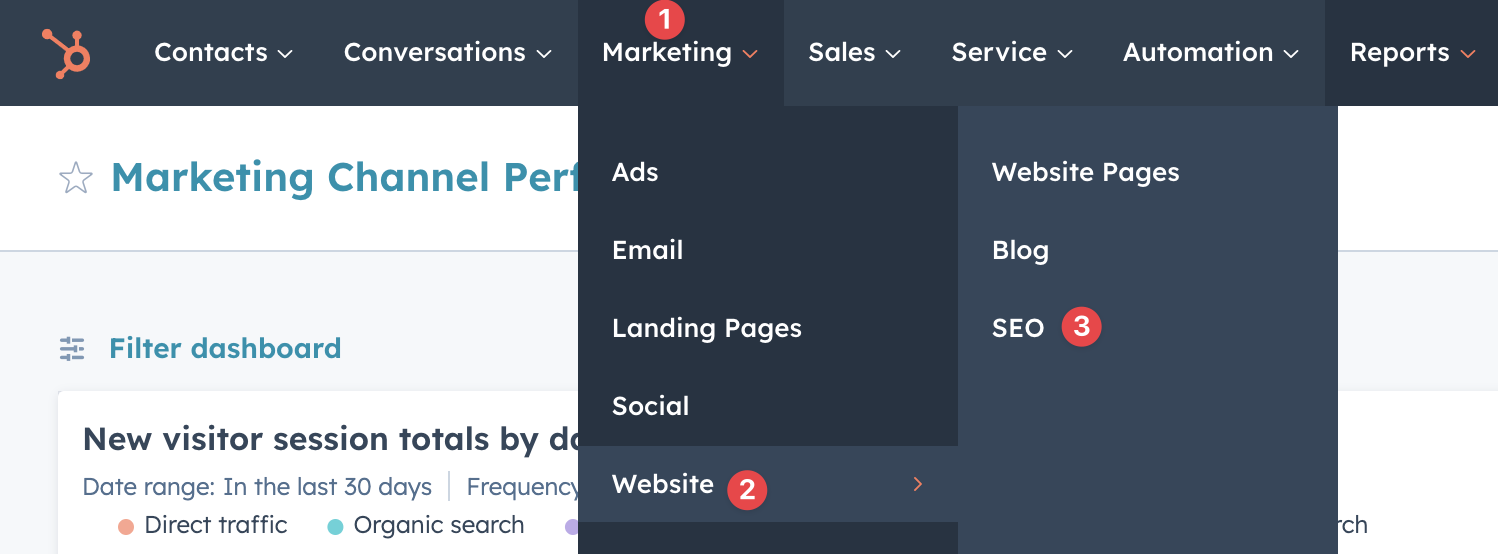
This tool has multiple sections, such as recommendations and topics. Let's talk about the recommendations section first.
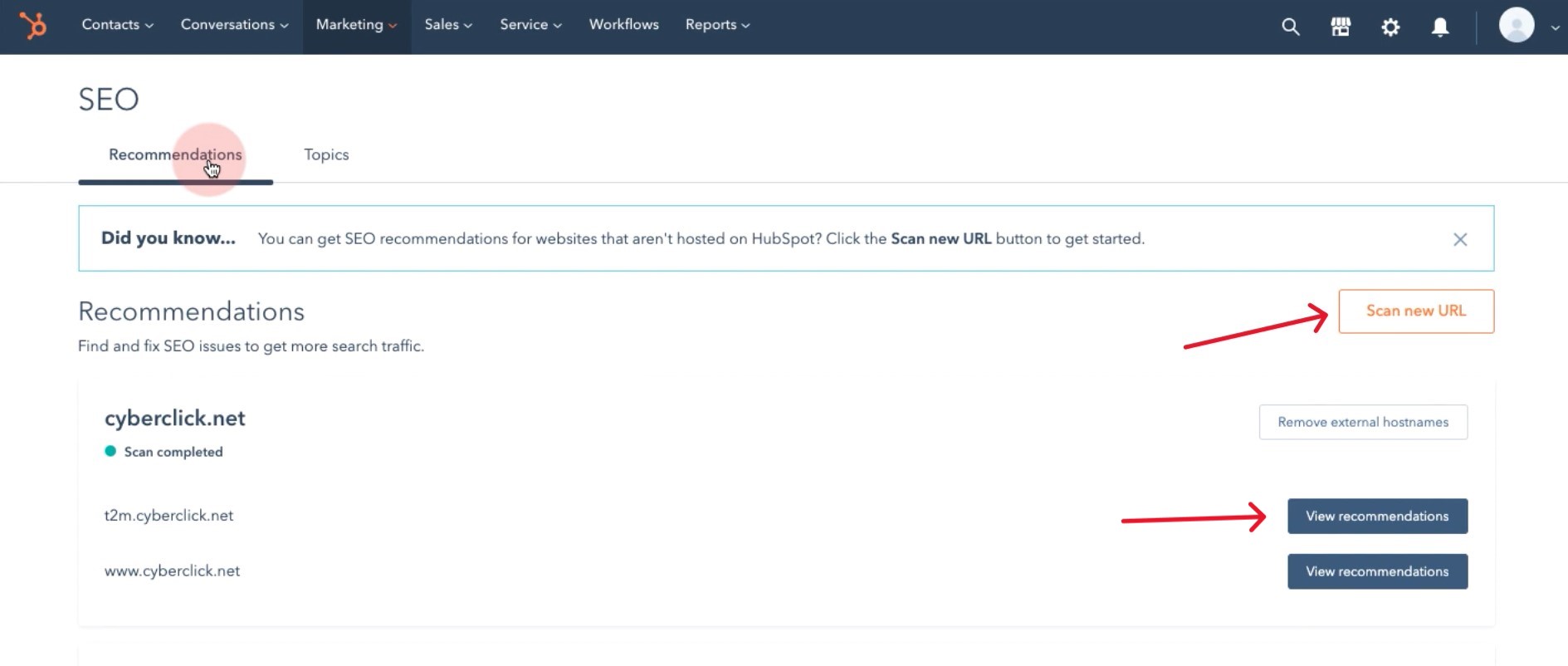
The idea behind this section is to scan the content on your website to give you insightful recommendations. Even if you don't use Hubspot for hosting your website, you can still enter the URL of your website to Hubspot's insights.
Once your website is successfully scanned, you can click on the view recommendations button. It will take you to a new page with the results.
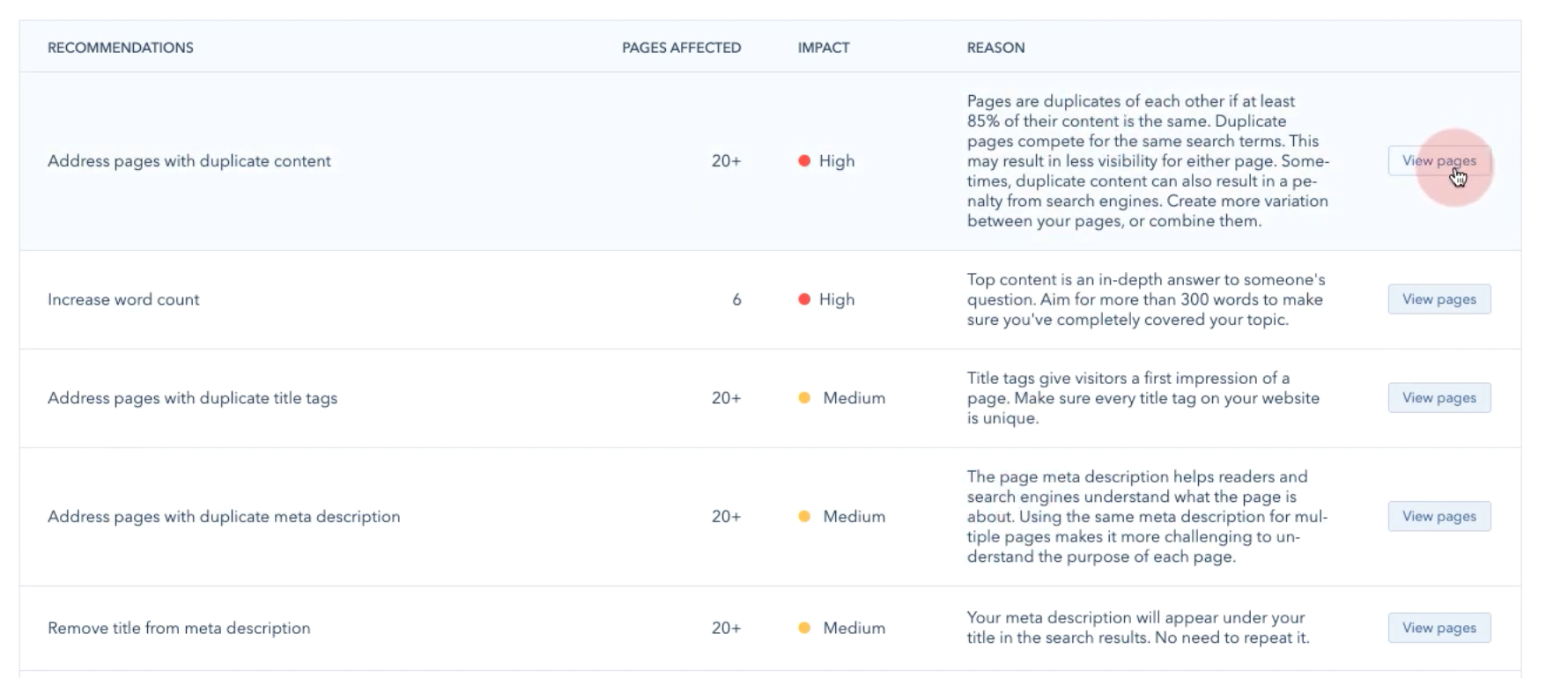
Hubspot will give you a list of recommendations along with how impactful they are. It also shows how many pages are affected by this change, and the reason behind every recommendation. You can click on the view page button to start making changes.
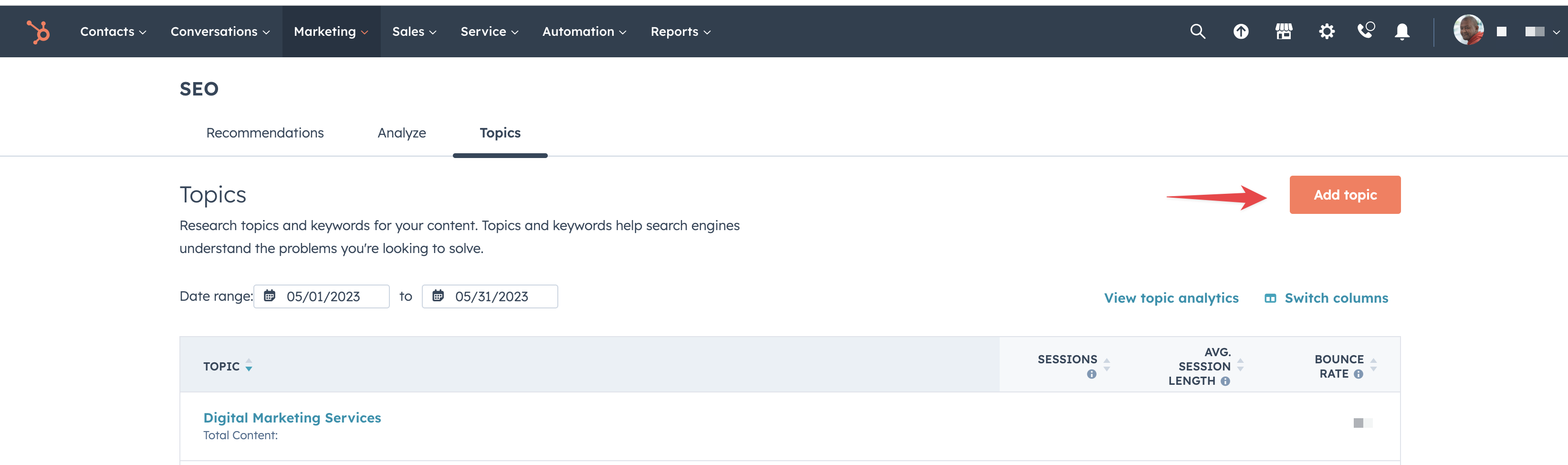
This is where you can create a topic cluster from scratch and visualize it using a simple mind map.
Let's create a new topic cluster by clicking on Add Topic.
You will be taken to a new page that helps you brainstorm your core topics. Start typing the different pillar topic ideas that come to your mind. Hubspot will show you the monthly search volume and difficulty of each keyword. Hubspot says that difficulty levels of less than 75 should be okay.
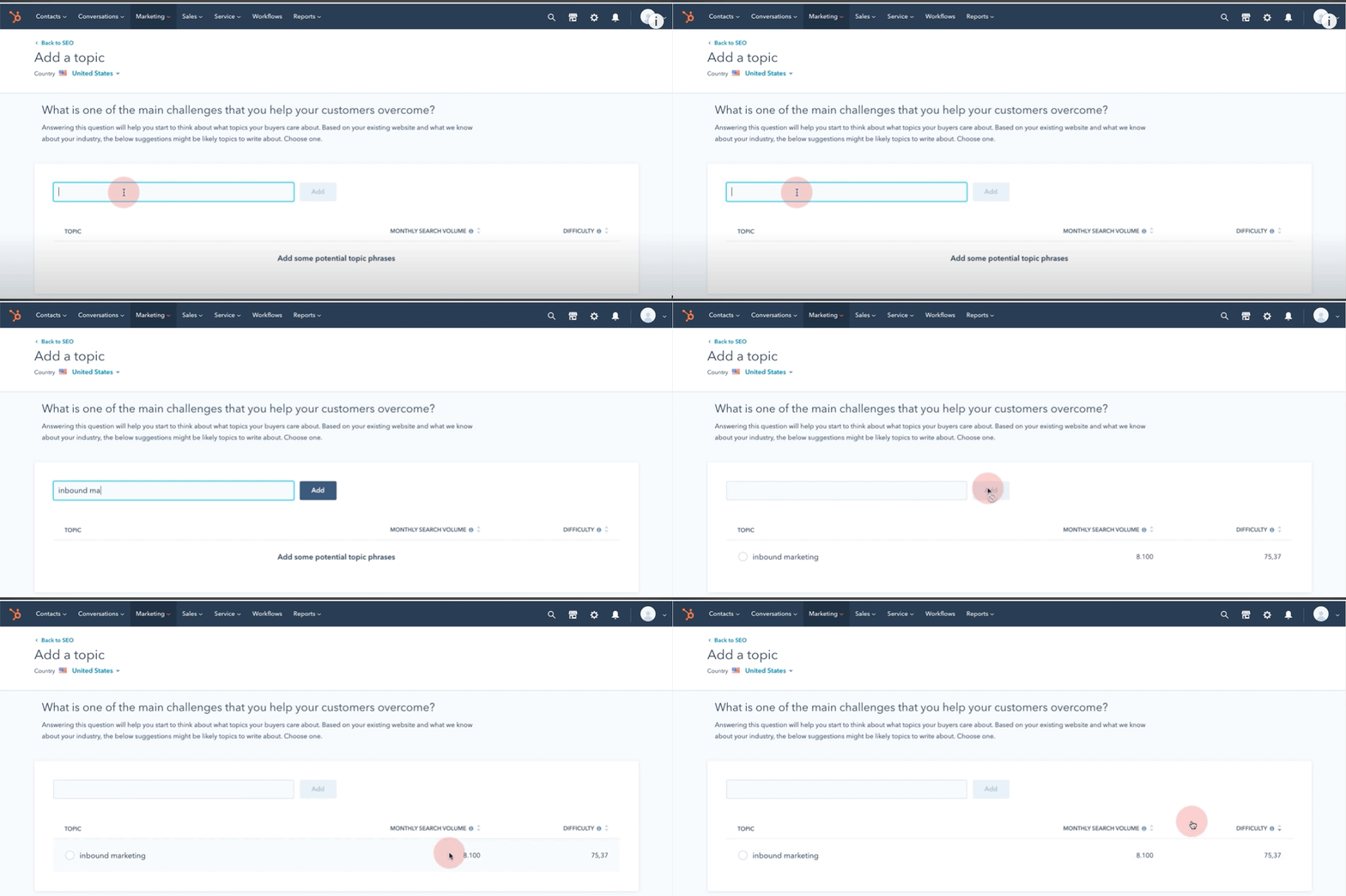
After typing a bunch of topics and comparing their performance, choose the topic with the best search volume and a low difficulty level, then click Create Topic.
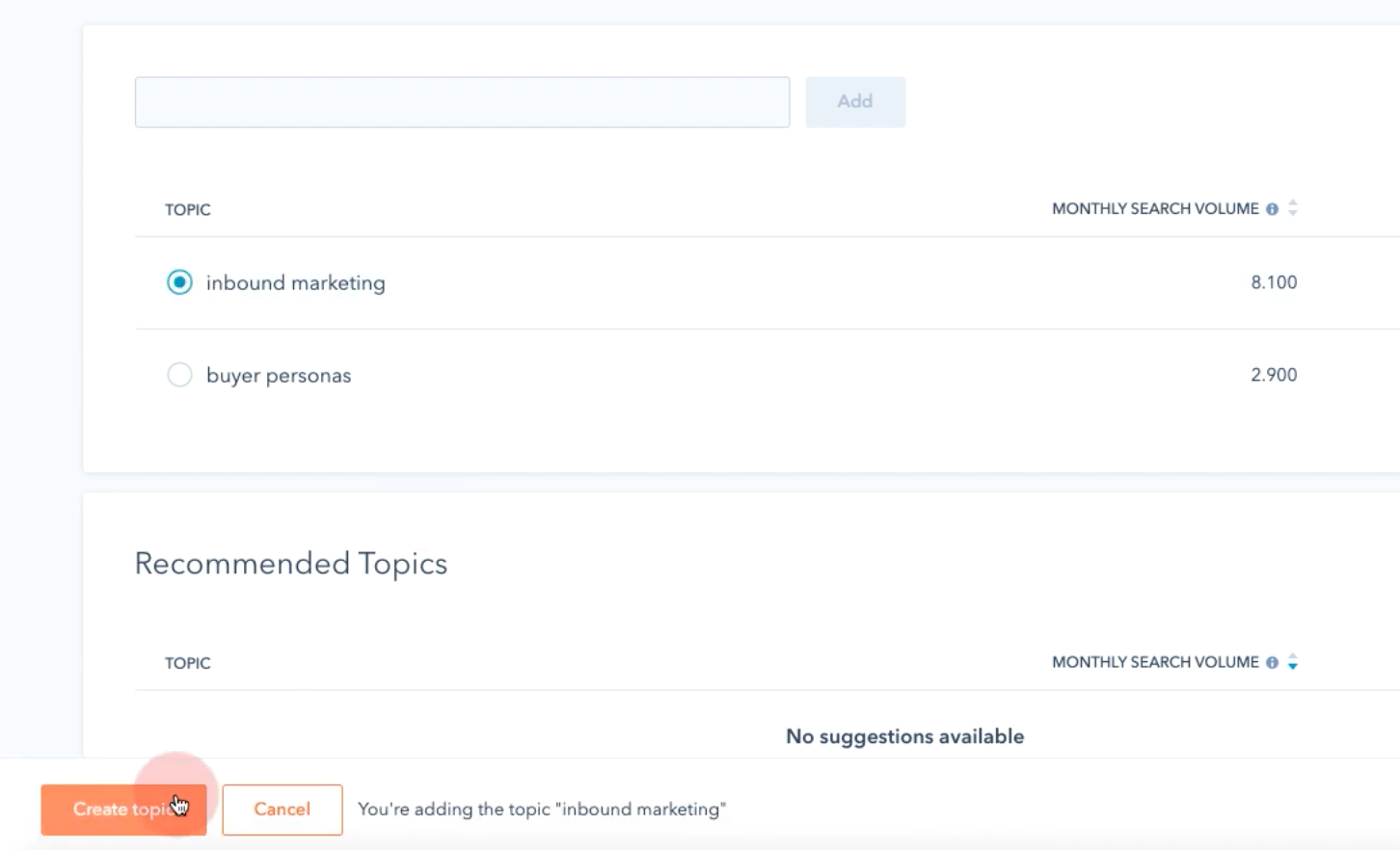
Voila! A new mind map is created with your chosen topic as the pillar page in the center.
If your pillar page is up and running, you can attach the link using the Add Content URL button. Then, search for the title of your blogs/pages to link this page to your pillar page.
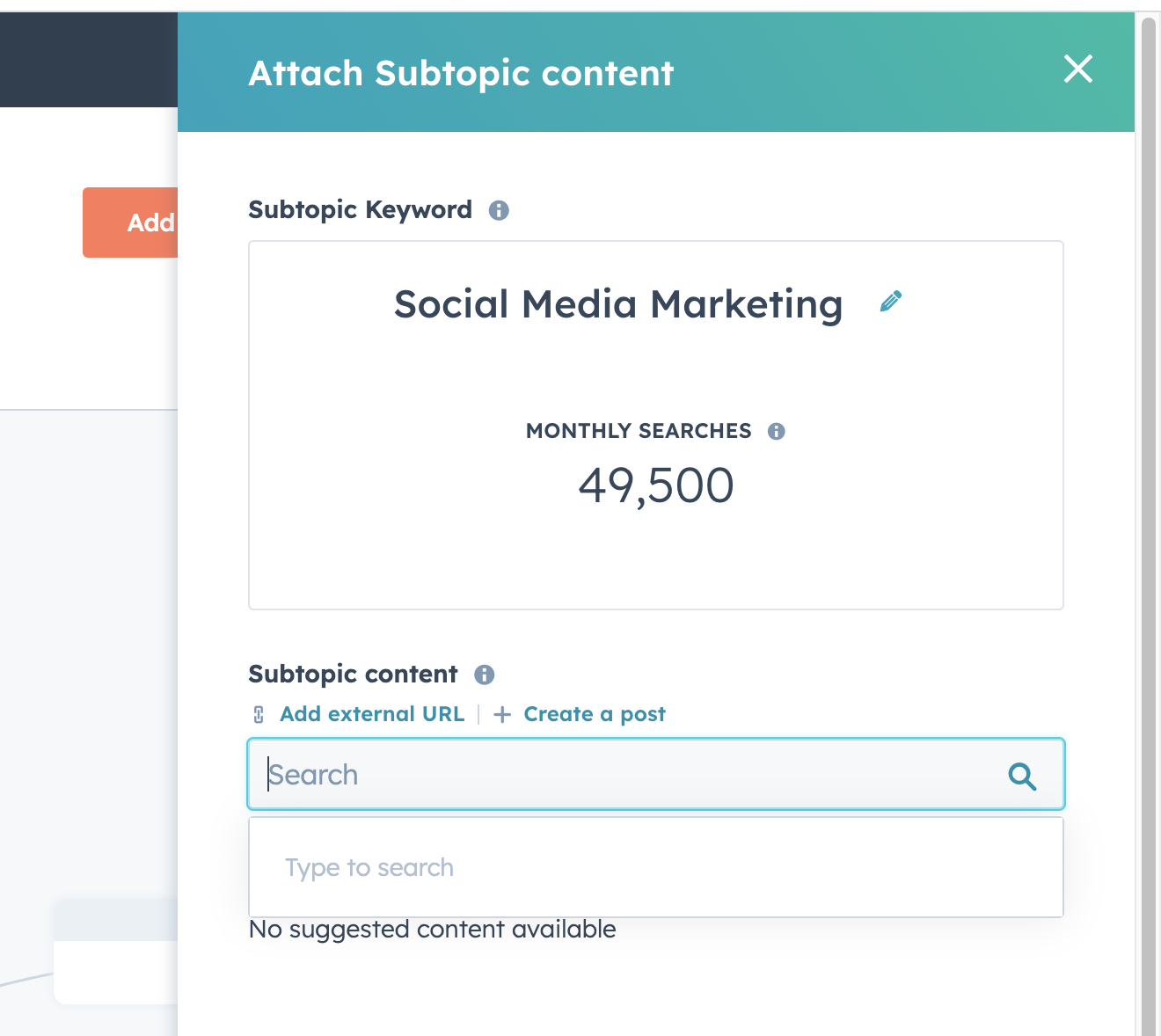
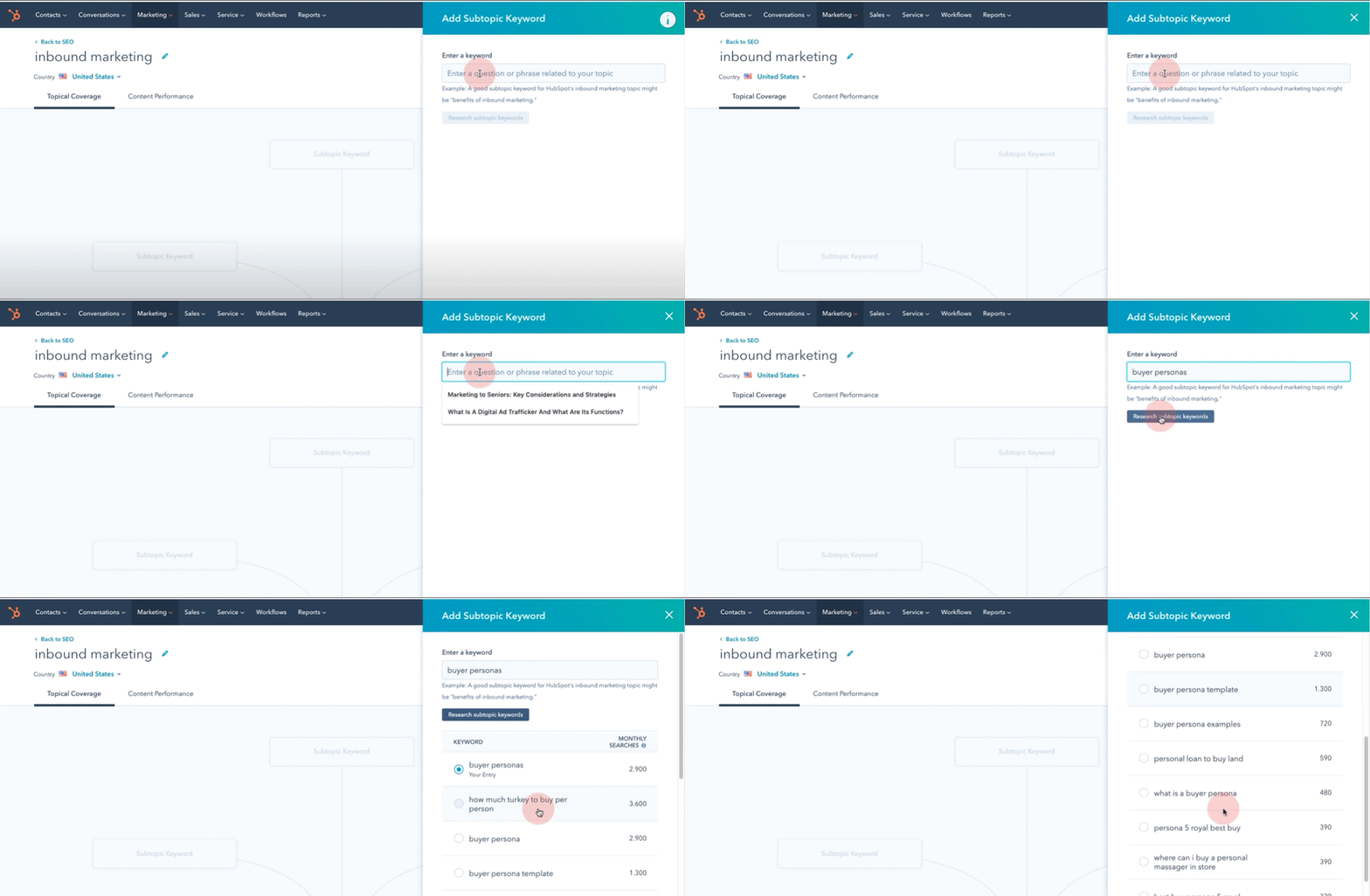
There are many empty slots for subtopics. Let's start filling them. We can do that by clicking on Add Subtopic Keyword.
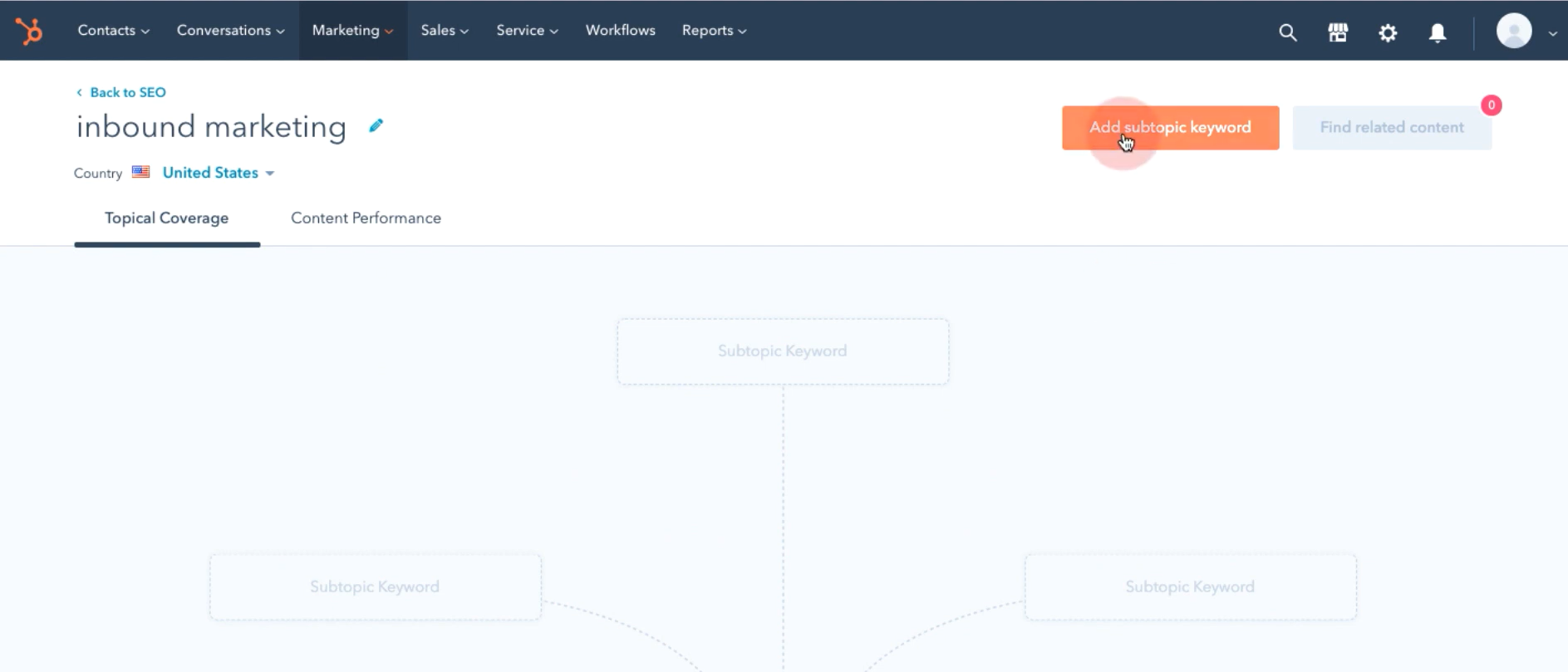
Enter a keyword that is more specific than your core topic. Probably a long-tail keyword. Hubspot will automatically suggest similar keywords to the one you entered. Each one is shown along with the monthly search volume and difficulty.
Choose a keyword for your subtopic and click Save.
Don't forget to Search/add the link to your content once it's ready.
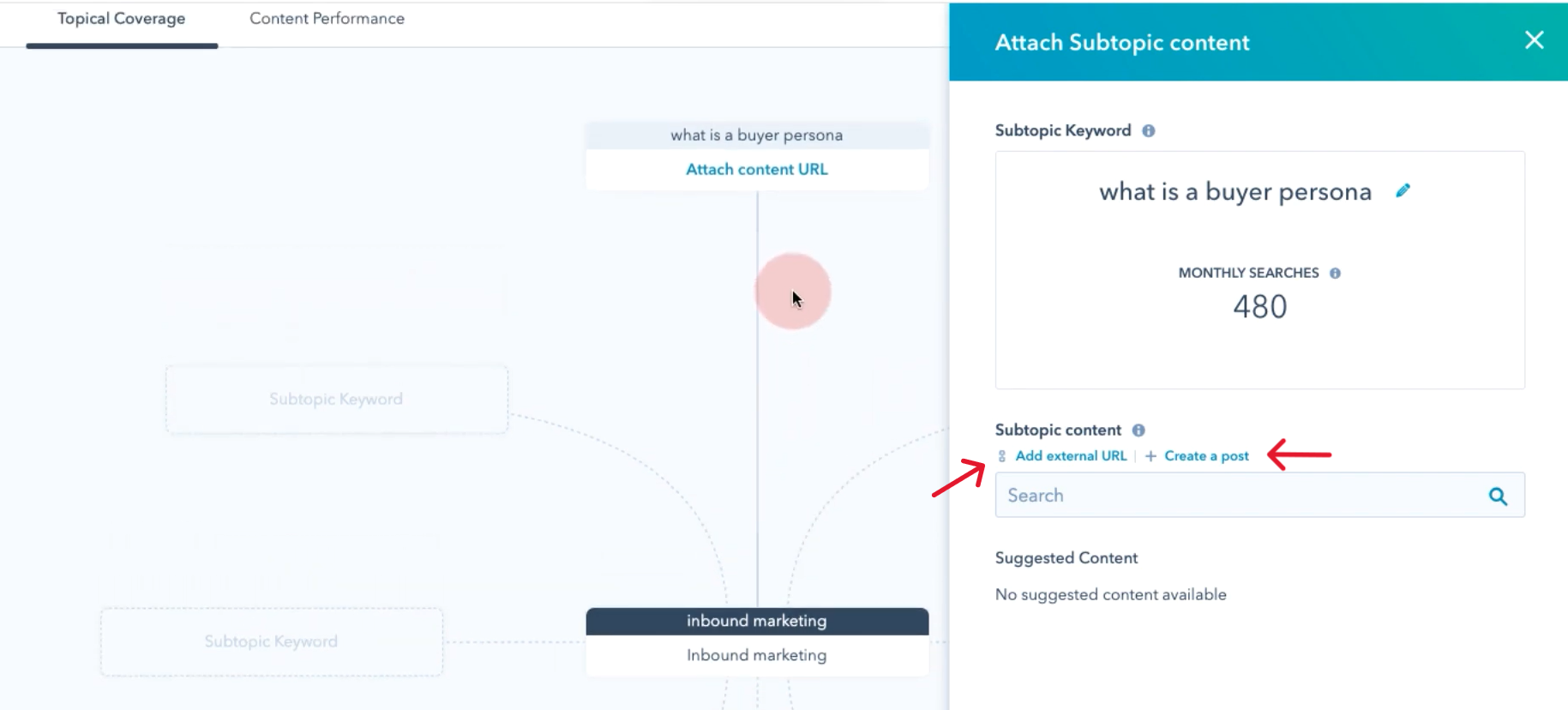
Now, Hubspot understands the relationship between your pillar page and your cluster content. Therefore, it can help you track your performance and ensure your links are working.
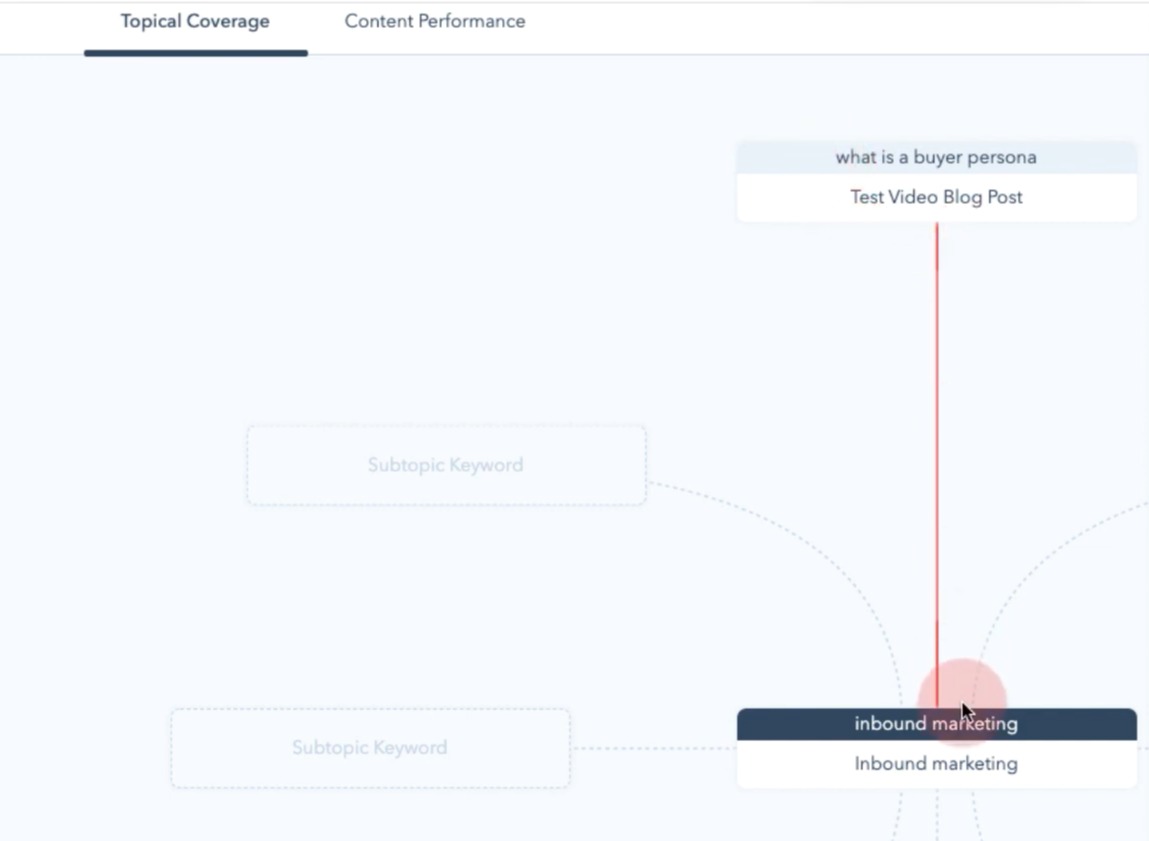
If you have internal linking between your pillar page and your subtopic, HubSpot will represent this with a red line connecting the two blocks on the mind map.
After creating our topic cluster, how can we track the performance? Luckily, Hubspot has a section called Content Performance dedicated to this.
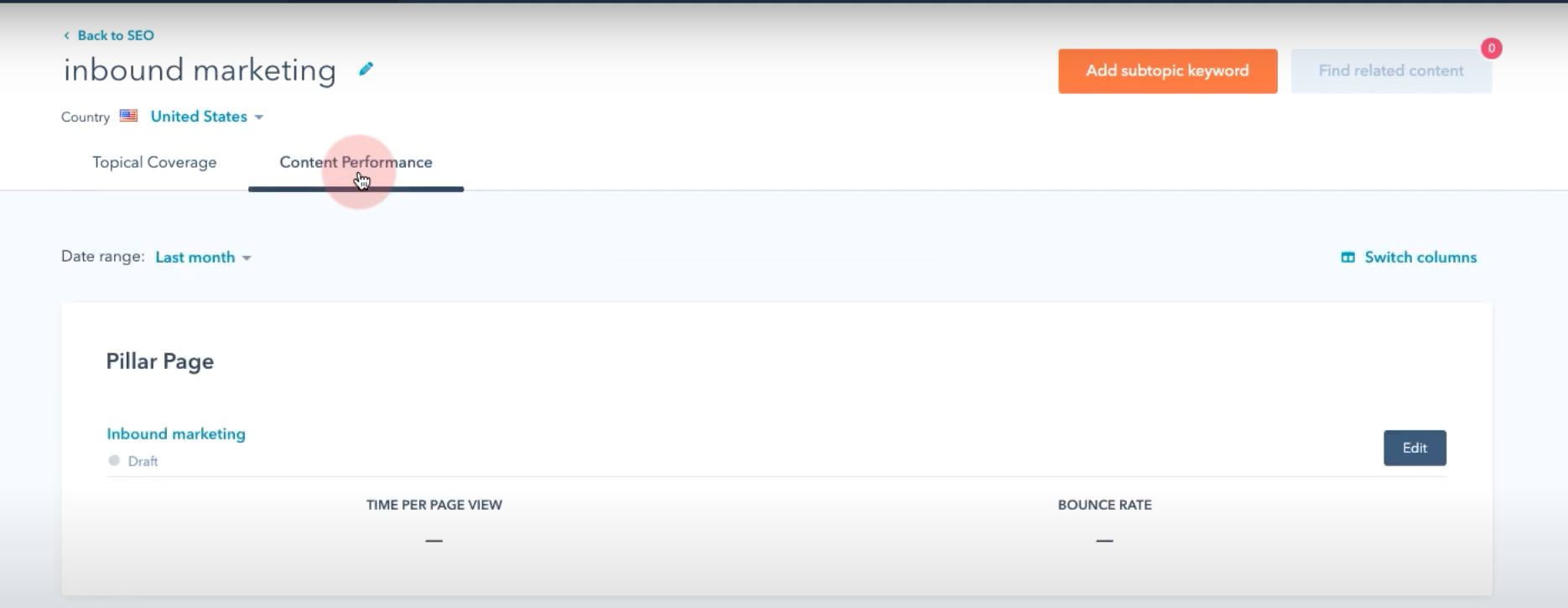
Hubspot shows a list of your content with relevant metrics, such as the subtopic keyword, bounce rate, time per view, and whether the cluster content is connected to the pillar page.
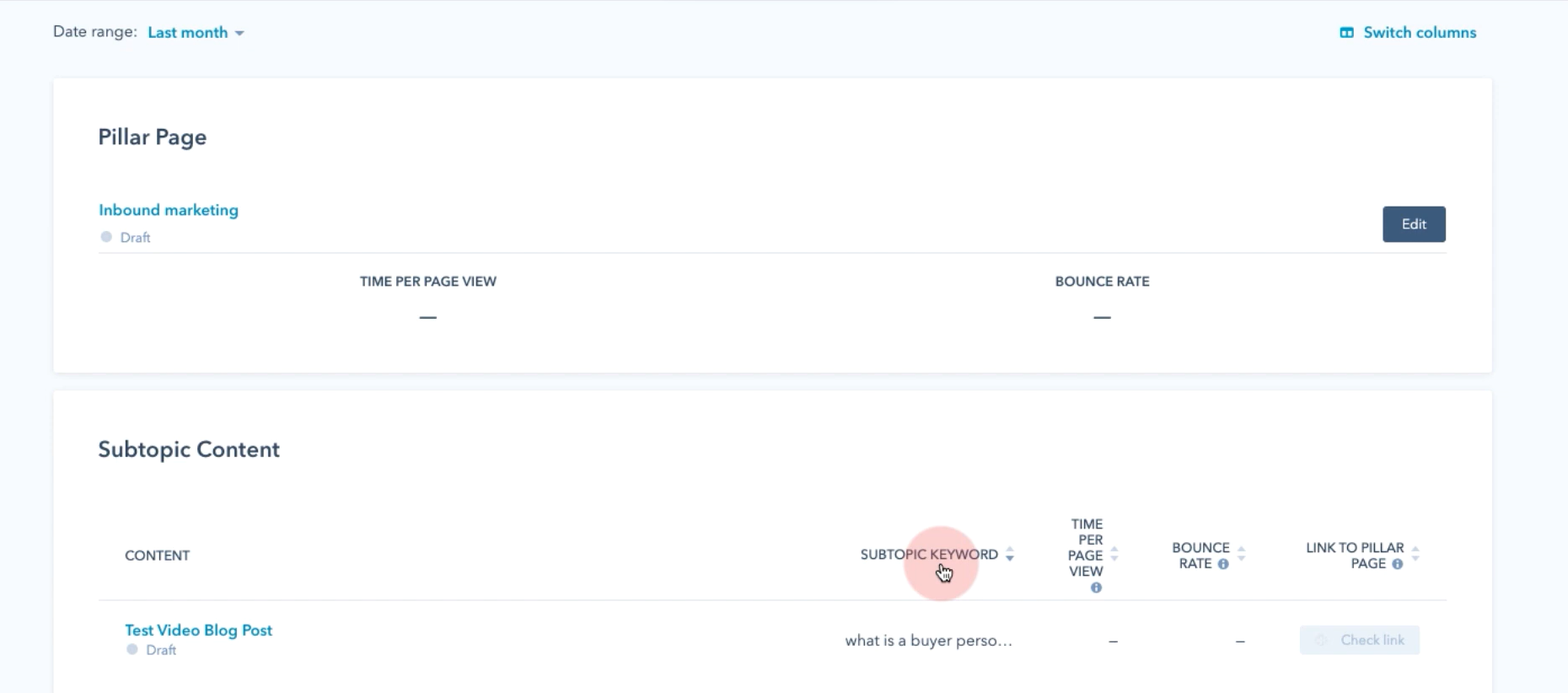
There are many alternatives to the mind map feature in Hubspot. You can use Canva, for example, to create a similar visualization for free.
Head to the home page of Canva. Then, click on More and choose the Mind Map option.
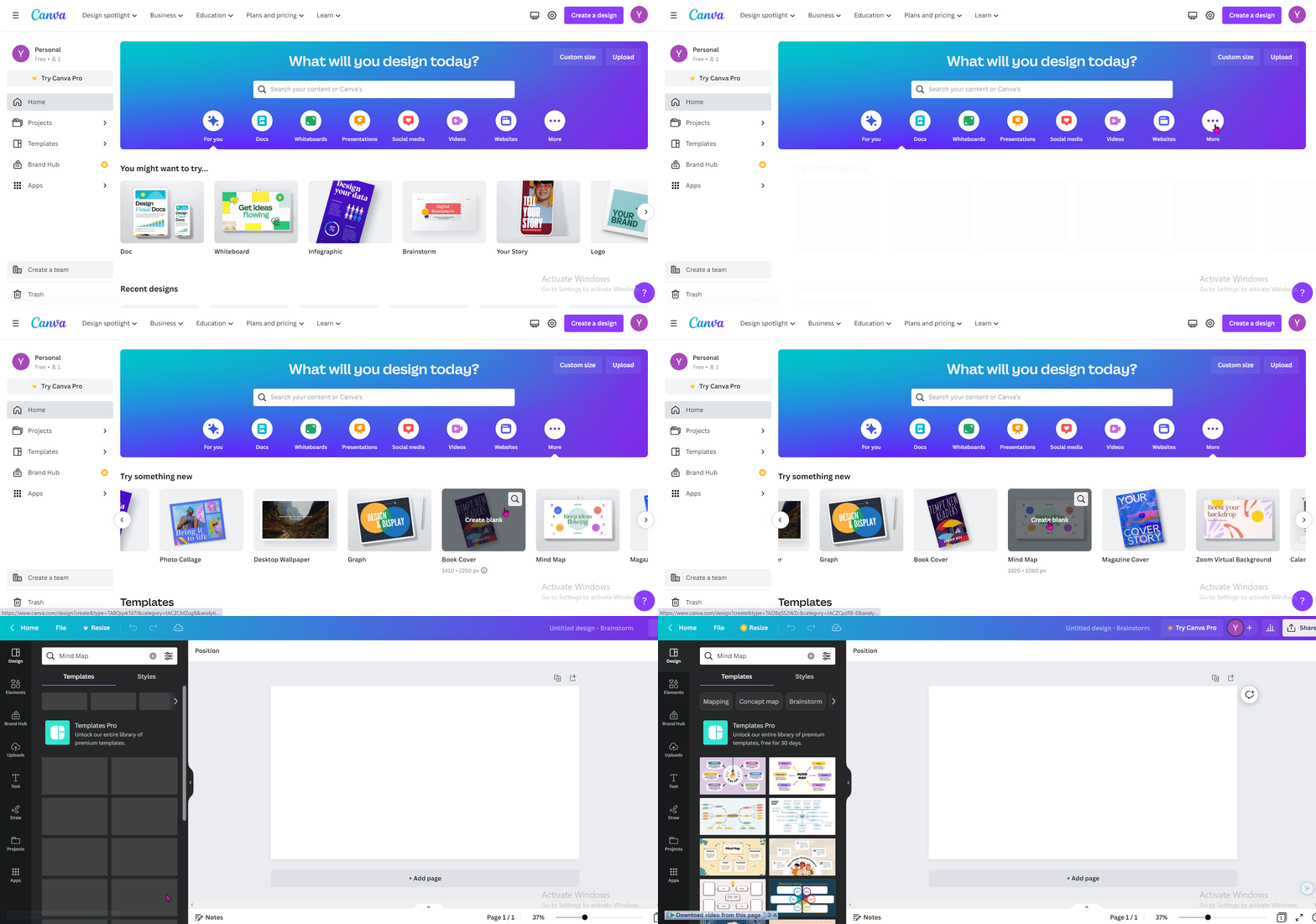
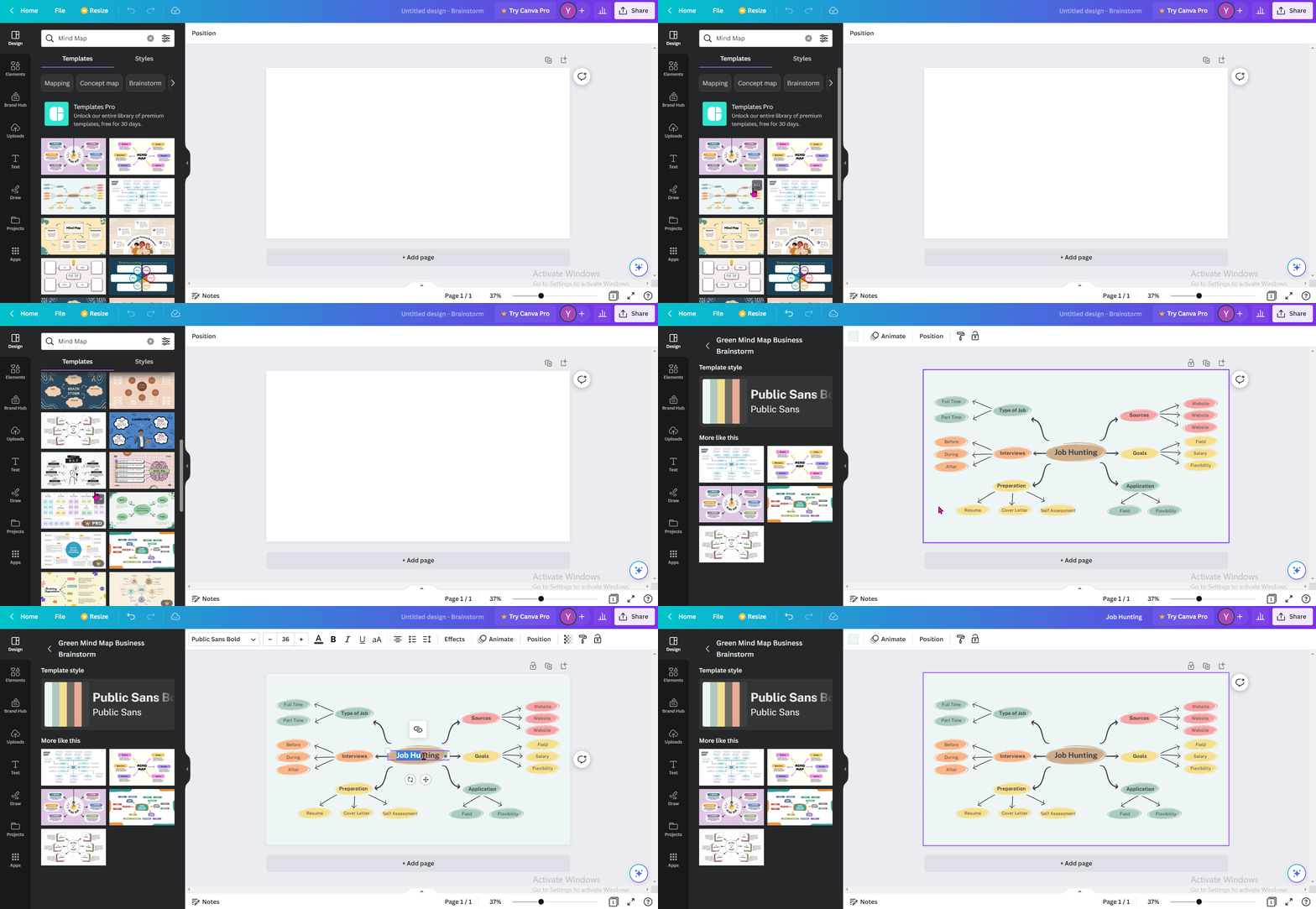
From the left sidebar, click on Design, then Templates. Hundreds of mind map templates will appear for you to choose from!
In summary, the topic cluster framework is the new revolution in digital marketing. This is your way to create SEO-optimized content without keyword cannibalization. Not only do they help you increase your brand visibility, but they also give you a structured content strategy for your website.
Start making the best out of this concept using online tools to rank higher on search engines today!
how you can use content gap analysis to evaluate and improve your website's content.
Enhance SEO: Decode search intent, conquer keyword ranking.
Secure position zero: Optimize content, answer user queries effectively.